
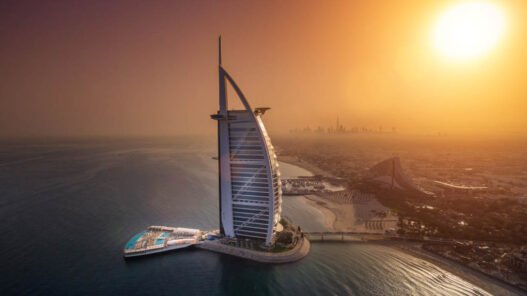
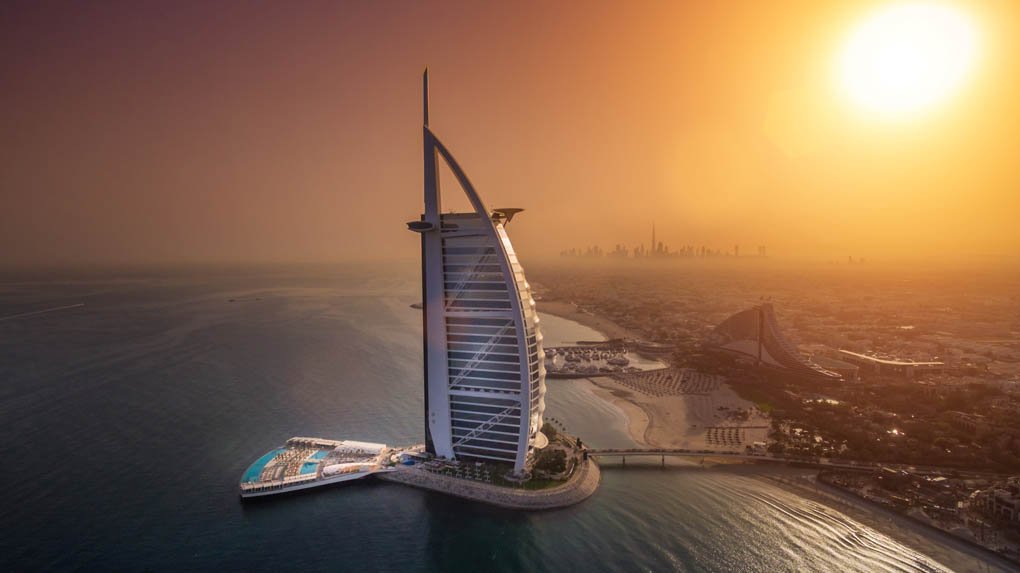
Dubai’s most iconic hotel, Burj Al Arab, is set to temporarily close its doors for 18 months as it undergoes a major restoration—marking the first comprehensive upgrade since the property opened in 1999.
Owned and operated by Jumeirah, the sail-shaped landmark has long been a symbol of Dubai’s rise as a global luxury destination. Now, after more than two decades of operation, the hotel is entering a new phase aimed at preserving its legacy while refining the guest experience for the future.
A New Vision Led by Tristan Auer
The restoration project will be led by acclaimed French interior architect Tristan Auer, known for his work on prestigious heritage properties including Hôtel de Crillon. Auer, who trained under renowned designers Philippe Starck and Christian Liaigre, will focus on enhancing the interiors while maintaining the distinctive identity that defines the Burj Al Arab.
The approach is expected to strike a careful balance—modernizing design elements and guest amenities without compromising the opulence and architectural character that have made the hotel globally recognizable.
A Legacy That Shaped Dubai’s Skyline
Rising 321 metres above the Arabian Gulf on a man-made island, the Burj Al Arab has been a defining feature of Dubai’s skyline for 27 years. Construction began in 1994 and involved thousands of workers at its peak, culminating in a grand opening in December 1999.
With just 199 duplex suites, the hotel is known for its extravagant interiors featuring marble, gold leaf, and Swarovski crystal—elements that helped position Dubai as a leading luxury travel destination on the world stage.
Iconic Moments at 210 Metres
Beyond its architecture, the hotel’s helipad—located 210 metres above ground—has hosted some of the most memorable moments in modern hospitality marketing. In 2004, Tiger Woods famously teed off from the platform to promote the Dubai Desert Classic. A year later, tennis legends Roger Federer and Andre Agassi played an exhibition match in one of the most unusual courts in the sport’s history.
These moments cemented the Burj Al Arab not just as a hotel, but as a global cultural and marketing icon.
The Beginning of a New Chapter
According to Thomas B. Meier, CEO of Jumeirah, the restoration represents a significant milestone for the brand.
He emphasized that the project will preserve the heritage and prestige of the property while elevating it to meet evolving luxury standards. The Burj Al Arab remains a flagship within Jumeirah’s exclusive portfolio of landmark destinations, making this transformation particularly significant.
What Comes Next
While the renovation timeline is set at 18 months, no specific reopening date has been confirmed. However, expectations are high that the refreshed Burj Al Arab will once again set new benchmarks in luxury hospitality upon its return.
For Dubai, the temporary closure of one of its most recognizable landmarks signals not an end, but an evolution—one that reflects the city’s continuous drive to redefine excellence on a global stage.